

Unveiling the Brushstrokes of Humor: A Historical Reflection on Comedy in Painting
Feb 26, 2024
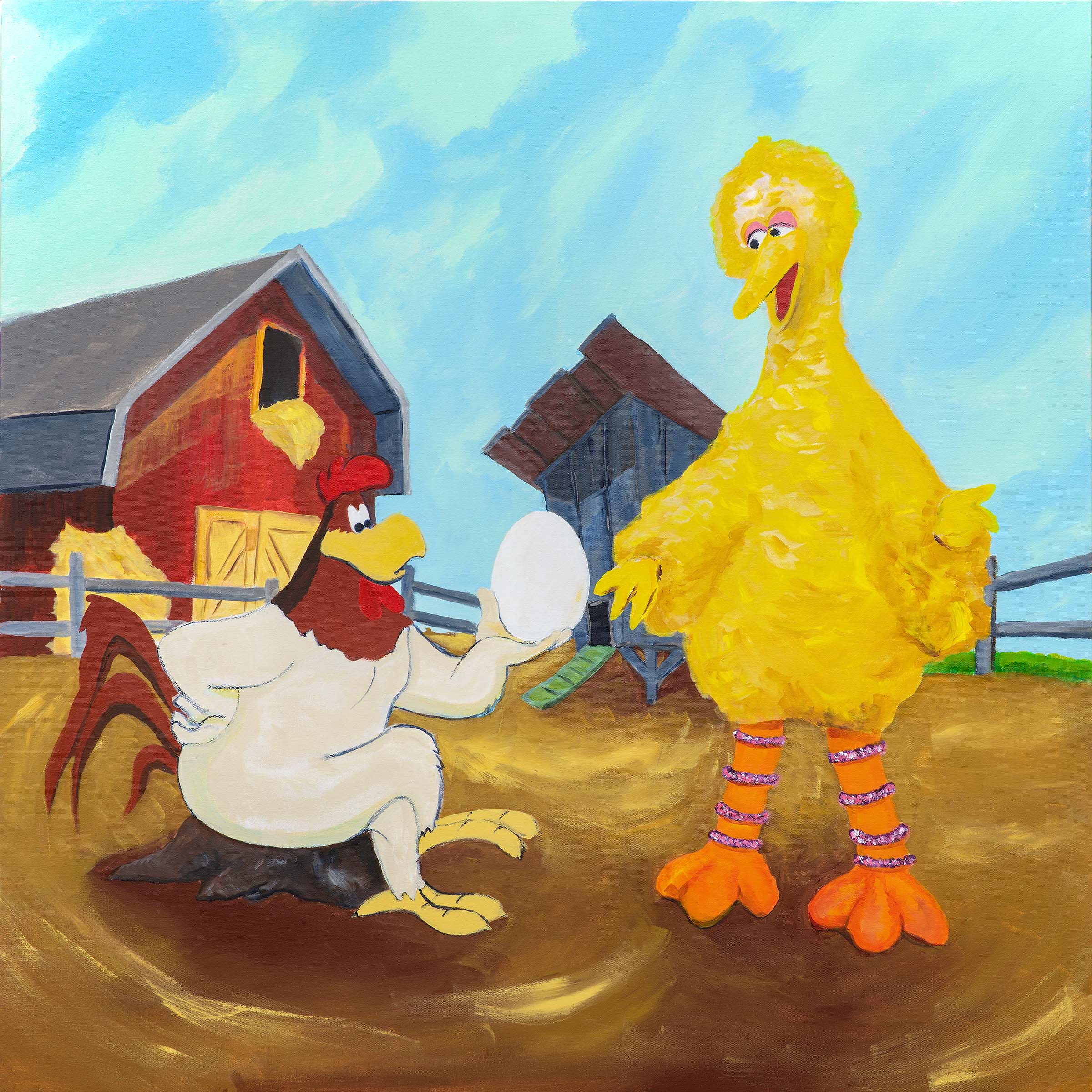
"We're Expecting" William Reed, 2023, Acrylic on Canvas, 48x48 inches
Introduction:
Humor has been a timeless facet of human expression, transcending mediums and epochs. In the vast canvas of art history, humor finds its vibrant hues, often interwoven with cultural narratives, social commentary, and personal perspectives. This blog delves into the historical application of humor in painting, unraveling the threads that connect laughter with the strokes of the brush.
1. The Renaissance Jesters:
During the Renaissance era, artists like Pieter Bruegel the Elder infused their works with subtle yet profound humor. Bruegel’s “The Wedding Dance” portrays a jovial scene of peasants celebrating, inviting viewers to chuckle at the antics of the revelers. Similarly, Hieronymus Bosch’s surreal masterpieces, such as “The Garden of Earthly Delights,” depict bizarre and whimsical scenarios that provoke both amusement and contemplation.
2. The Satirical Strokes of the 18th Century:
The Age of Enlightenment witnessed the rise of satirical painting, as artists sought to critique societal norms and political figures through humor. William Hogarth’s series of paintings, such as “A Rake’s Progress” and “Marriage à-la-mode,” employ wit and satire to expose the follies and vices of the upper classes. Through exaggerated characters and symbolic imagery, Hogarth lampoons the decadence and hypocrisy of his time.
3. Caricatures and Cartoons:
With the advent of mass printing in the 19th century, caricatures and cartoons emerged as powerful tools for social and political commentary. Artists like Honoré Daumier and Thomas Nast employed humor to skewer authority figures and highlight social injustices. Daumier’s lithographs, such as “Gargantua” and “The Legislative Belly,” lampooned the excesses of French politicians, while Nast’s cartoons played a pivotal role in shaping public opinion during the era of American Reconstruction.
4. Modern and Contemporary Explorations:
In the modern and contemporary art world, humor continues to be a potent force for challenging conventions and provoking thought. Artists like Salvador Dalí and René Magritte employed surrealism to subvert reality and evoke laughter through absurd juxtapositions. Pop artists such as Roy Lichtenstein and Claes Oldenburg playfully recontextualized everyday objects, infusing them with humor and irony.
Conclusion:
From the Renaissance to the present day, humor in painting has served as a mirror to society, reflecting its absurdities, contradictions, and triumphs. Whether through satire, caricature, or surrealism, artists have harnessed the power of laughter to entertain, provoke, and enlighten. As we gaze upon the canvases of history, let us embrace the laughter that echoes through the ages, reminding us of the universality of human folly and the enduring power of art to transcend Title: “Unveiling the Brushstrokes of Humor: A Historical Reflection on Comedy in Painting”