

Exploring Walton Ford's Captivating Art: Nature, History, and Symbolism | Animals in Art Series
Mar 06, 2024
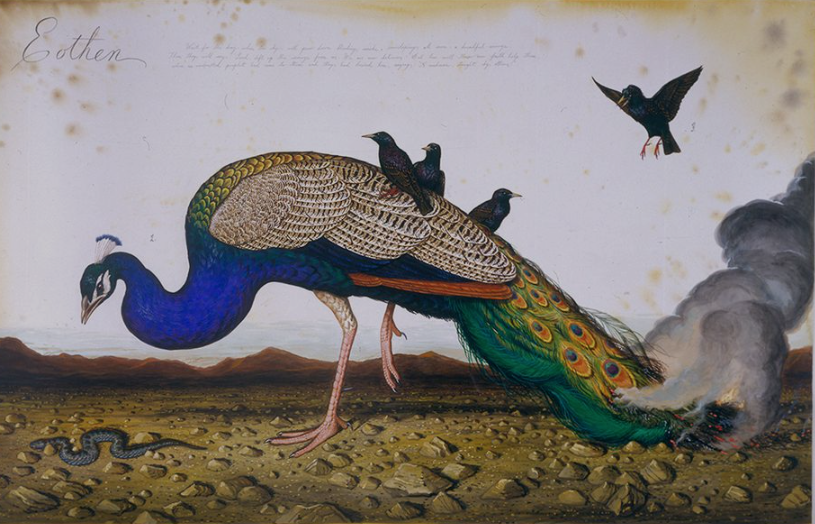
Original Artwork by Walton Ford, Copyright Walton Ford
Welcome to the latest installment of our Animals in Art series, where we journey into the captivating world of Walton Ford, a contemporary artist whose work intricately weaves together themes of nature, history, and symbolism. Join us as we explore the layers of meaning within Ford's paintings, examining his meticulous technique, rich allegories, and profound insights into humanity's relationship with the natural world. Through this exploration, we aim to shed light on the profound impact of animals in art and the thought-provoking narratives they inspire.
Early Life and Influences
Born in 1960 in Larchmont, New York, Walton Ford developed a fascination with wildlife and natural history from a young age. He was deeply influenced by the works of 19th-century naturalists and illustrators such as John James Audubon, whose monumental "Birds of America" series left an indelible mark on Ford's artistic sensibilities. Ford's early exposure to these historical works laid the foundation for his distinctive style and thematic preoccupations.
Style and Technique
Ford's paintings are characterized by their large scale, intricate detail, and meticulous rendering of flora and fauna. He primarily works with watercolor and gouache on paper, employing traditional techniques reminiscent of scientific illustration. However, Ford imbues his subjects with a surreal quality, often portraying them in dynamic, allegorical compositions that challenge viewers' perceptions of reality.
One of Ford's signature techniques is his use of anthropomorphism, wherein animals are endowed with human characteristics and emotions. This blending of the natural and the human serves to underscore the interconnectedness of all living beings and invites contemplation on our shared existence within the natural world.
Themes and Symbolism
At first glance, Walton Ford's paintings may appear to be straightforward depictions of wildlife, but upon closer inspection, they reveal complex narratives and allegorical layers. Many of his works explore themes such as colonialism, environmental destruction, and the exploitation of nature for human gain.
Ford frequently incorporates historical references and literary allusions into his art, weaving together disparate elements to construct allegorical narratives that resonate on multiple levels. For example, in his painting "Topsy," Ford depicts an elephant being electrocuted as a public spectacle, drawing parallels between the animal's fate and broader issues of power, control, and societal attitudes towards the natural world.
Critical Reception and Impact
Walton Ford's work has garnered widespread acclaim for its technical virtuosity, thematic depth, and provocative imagery. His paintings have been exhibited in prestigious galleries and museums around the world, cementing his status as one of the foremost contemporary artists working today.
Beyond the art world, Ford's work has also sparked dialogue and debate about humanity's relationship with the environment and the ethical implications of our treatment of animals. By confronting viewers with uncomfortable truths and challenging conventional wisdom, Ford encourages us to reexamine our assumptions and consider the consequences of our actions on the world around us.
Conclusion
In a world increasingly disconnected from nature, Walton Ford's art serves as a powerful reminder of the beauty, complexity, and fragility of the natural world. Through his meticulously crafted paintings, he invites us to contemplate our place within the broader tapestry of life and to confront the consequences of our actions on the planet and its inhabitants. With each stroke of his brush, Ford offers a glimpse into a world where the boundaries between reality and imagination blur, inviting us to explore the mysteries that lie beyond.