

Delving Deeper into the Origins of Animal Art: Insights from Early Cave Paintings | Animals in Art Series
Mar 03, 2024
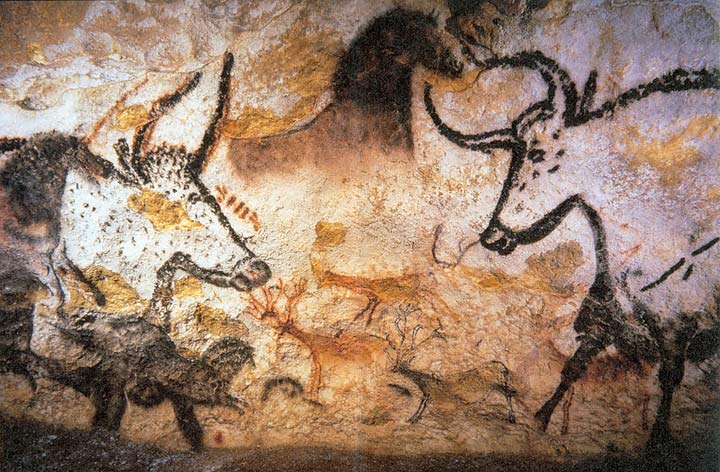
Public Domain Image: Cave paintings from Lascaux caves (Montignac, Dordogne, France)
In the shadows of prehistory, where time seems to stand still, early humans left behind a legacy etched on the walls of caves. These ancient canvases, concealed within the earth’s embrace, hold the secrets of our distant past. Among the vivid tapestry of images adorning these sacred spaces, the depictions of animals reign supreme, offering a captivating glimpse into the minds of our ancestors.
Imagine stepping into the darkness of a cave, torch in hand, and being greeted by the mesmerizing sight of ancient artwork. Here, amidst the flickering light, majestic bison roam alongside graceful horses, while enigmatic mammoths and fearsome predators lurk in the shadows. These creatures, rendered in shades of ochre and charcoal, seem to come to life before our very eyes.
But why did our ancient ancestors feel compelled to paint these animals with such fervor? The answer lies in the deep symbiotic relationship between early humans and the natural world. Animals were not merely subjects of art but integral to the survival and spiritual beliefs of prehistoric societies.
For early humans, hunting was not just a means of sustenance but a sacred ritual intertwined with spiritual significance. The successful hunt ensured the survival of the tribe, making animals revered symbols of strength, resilience, and life itself. By immortalizing these creatures on cave walls, early humans may have sought to honor and appease the spirits of the animals, invoking their favor in the hunt and ensuring the prosperity of their communities.
Moreover, cave art served as a form of storytelling, a visual language through which our ancestors communicated their experiences, beliefs, and worldview. These intricate compositions were more than just static images; they were dynamic narratives, capturing the essence of ancient life and preserving it for future generations.
The meticulous detail and realism of early cave paintings also suggest a deep understanding of animal behavior and anatomy. Through keen observation and artistic skill, early humans were able to capture the essence of these creatures, imbuing their artwork with a sense of life and vitality.
As we stand in awe before these ancient masterpieces, we are reminded of the timeless power of art to transcend time and connect us to our shared human heritage. Early cave paintings offer us a window into the minds of our ancestors, revealing their reverence for the natural world and their profound connection to it. In these ancient images, we find echoes of our own fascination with the beauty and mystery of the animal kingdom, bridging the gap between past and present in a timeless dance of creativity and wonder.